
Last Updated: June 24, 2026
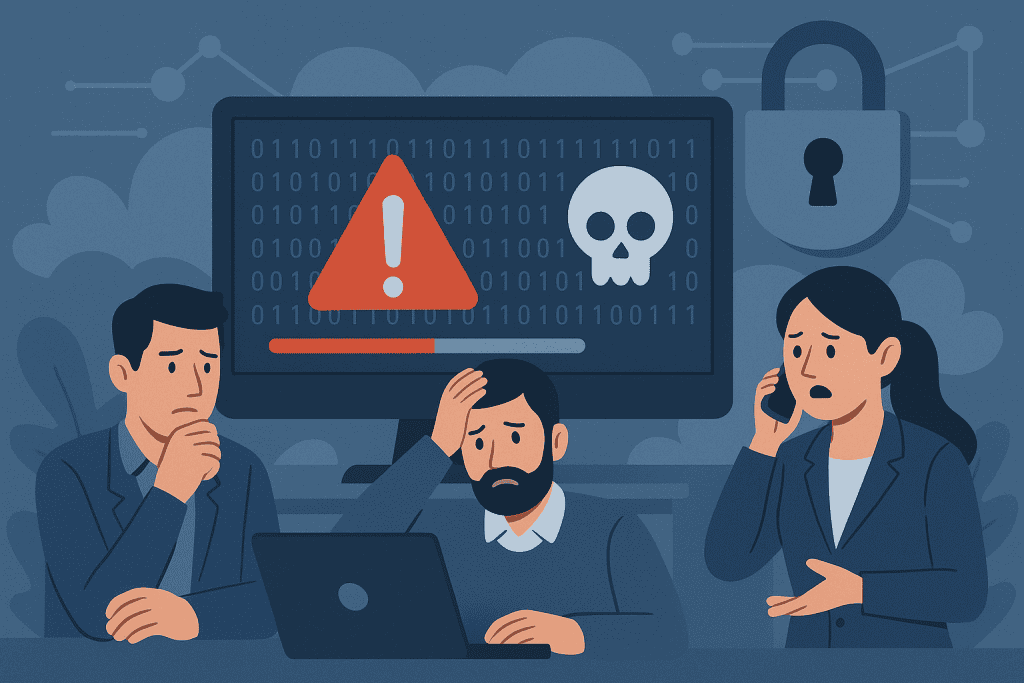
Australia’s cyber threat landscape has shifted, and the data tells a confronting story. In the past twelve months alone, three high-profile breaches collectively exposed the personal records of over nine million Australians. These were not fringe incidents. They hit trusted household names across aviation, telecommunications, and retail.
The ISO 27001 information security management standard exists precisely to prevent these situations. Not as a compliance checkbox, but as a living framework that forces organisations to identify risks before attackers do.
If your business handles customer data, this standard is no longer optional. Here is why
1. The Breach Reality: What Is Happening in Australia
Three incidents in mid-2025 crystallised the scale of Australia’s cybersecurity problem.
Qantas: 5.7 Million Customers Exposed
Qantas confirmed a breach affecting approximately 5.7 million customers through a third-party call centre system. Phone numbers, birth dates, home addresses of over one million individuals, and names and email addresses of around four million more were all compromised. Security experts noted that basic personal identifiers are more than sufficient to enable identity theft and targeted fraud.
iiNet: 280,000 Customers Affected
On 19 August 2025, internet provider iiNet (part of TPG Telecom) reported a cyber incident exposing data on approximately 280,000 customers. The attack exploited stolen employee credentials, gaining access to email addresses, landline numbers, usernames, street addresses, and modem setup passwords. The entry point was compromised internal access controls.
SABO: 3.5 Million Records Left Unencrypted
Fashion retailer SABO left a 292 GB database publicly accessible online. More than 3.5 million PDF documents containing a decade of customer records were exposed with no encryption whatsoever.
Did You Know?
Australia’s data breach notifications reached their highest level in five years in 2024-2025, according to the Office of the Australian Information Commissioner (OAIC). Health, finance, and retail sectors account for the largest share of reported incidents.
2. What Is ISO 27001 and What Does It Actually Do?
ISO 27001 is the international standard for Information Security Management Systems (ISMS). Published by the International Organization for Standardization and the International Electrotechnical Commission, it defines a systematic approach to managing sensitive company and customer information.
Unlike a one-time security audit, ISO 27001 is an ongoing management system covering people, processes, and technology. Certified organisations must:
- Conduct formal risk assessments to identify and prioritise threats
- Implement security controls proportionate to the risk level
- Define and regularly test incident response procedures
- Train staff on information security awareness
- Review and improve the system through ongoing internal audits
3. Five Core Protections ISO 27001 Provides
| Protection Area | What ISO 27001 Requires | Breach It Would Have Addressed |
|---|---|---|
| Access Control | Role-based permissions; MFA; credential lifecycle management | iiNet (stolen credentials exploited) |
| Encryption and Data Handling | Encryption at rest and in transit; data minimisation | SABO (unencrypted public database) |
| Third-Party Risk Management | Security clauses in vendor contracts; supplier audits | Qantas (breach via third-party call centre) |
| Incident Response Planning | Documented detection, containment and communication plan | All three incidents (slow/reactive responses) |
| Continual Improvement | Annual reviews, internal audits, management reporting | Systemic vulnerabilities caught before exploitation |
4. How ISO 27001 Would Have Changed the Outcome
The three 2025 breaches share identifiable root causes. Each maps directly to ISO 27001 Annex A controls.
The iiNet Breach: Stolen Credentials
ISO 27001 Annex A Control 5.15 (Identity Management) and Control 8.5 (Secure Authentication) require multi-factor authentication and strict limits on privileged access. Stolen employee credentials alone would not have been sufficient to access customer systems under a certified ISMS.
The SABO Breach: Unencrypted Data
Annex A Control 8.24 (Cryptography) requires a documented cryptography policy. An unencrypted, publicly accessible database of 3.5 million records is a direct violation of this control, one that a certification audit would have identified and required remediation before sign-off.
The Qantas Breach: Third-Party Risk
Control 5.19 (Information Security in Supplier Relationships) requires documented security requirements in contracts with all third-party vendors processing customer data. Under an ISMS, the call centre partner would have needed to demonstrate its own security controls before access was granted.
Expert Insight
Working with organisations across healthcare, logistics, and professional services, the single most common pre-breach finding is unmanaged third-party access. Suppliers are trusted implicitly rather than verified systematically. ISO 27001’s supplier security controls are not bureaucracy. They are the gap between a contained incident and a front-page breach.
5. ISO 27001 and Australian Legal Compliance
Australia’s Privacy Act 1988 and the Notifiable Data Breaches (NDB) scheme require organisations to notify affected individuals and the OAIC when a breach is likely to result in serious harm. Maximum penalties under the Privacy Act now reach $50 million for serious or repeated interference.
ISO 27001 certification does not provide automatic legal immunity, but it does three critical things:
- Demonstrates due diligence in the event of a regulatory investigation
- Creates documented evidence that proportionate security controls were in place
- Reduces the likelihood of breaches that trigger notification obligations
For organisations in regulated industries such as healthcare, finance under APRA CPS 234, or government, ISO 27001 alignment is increasingly expected. If you are unsure what the process involves, our guide on what to expect during your certification audit walks through each stage in plain language.
6. The Business Case: Beyond Risk Avoidance
| Metric | Without ISO 27001 | With ISO 27001 |
|---|---|---|
| Average cost of a data breach (AU) | $4.5M+ (IBM, 2024) | Reduced via faster detection and containment |
| Time to identify a breach | 194 days average | Shortened via mandated monitoring controls |
| Customer trust post-breach | 62% less likely to return | Certification signals proactive security posture |
| Tender and procurement eligibility | Often excluded from govt / enterprise bids | ISO 27001 commonly required in RFP criteria |
| Cyber insurance premiums | Higher and increasing annually | Demonstrably lower with a certified ISMS |
7. Common Mistakes Organisations Make Without ISO 27001
- Assuming cyber insurance replaces security controls. Insurers are increasingly denying claims where basic controls were absent
- Treating security as an IT problem rather than a business governance issue. ISO 27001 requires board-level ownership
- Conducting one-off penetration tests without ongoing risk management. Point-in-time tests miss systemic process failures
- Extending implicit trust to suppliers without contractual security requirements. Vendor access is a leading breach vector
- Ignoring insider threats. ISO 27001 addresses both malicious and accidental insider risk through access controls and awareness training
8. Pro Tips: Starting Your ISO 27001 Journey
- Start with a gap analysis. Map your current security posture against ISO 27001 Annex A controls to identify your highest-risk areas before committing resources.
- Secure executive buy-in first. ISO 27001 requires a management representative and board-level commitment. Without it, implementation stalls at the documentation phase.
- Scope your ISMS carefully. You do not need to certify your entire organisation on day one. Starting with a defined scope reduces cost and time to certification.
- Consider combining standards. If your business also needs ISO 9001 quality management certification, implementing both together reduces audit duplication and total cost.
- Use an experienced consultant. Whether you are based in Brisbane, Melbourne, or need ISO consulting in Sydney, working with specialists reduces time to certification and avoids costly scope mistakes. Plan for three to six months for a first certification.
Frequently Asked Questions
For a broader list of questions, visit our ISO certification FAQs page. The most common questions specific to ISO 27001 are answered below.
1. What does ISO 27001 certification cover?
ISO 27001 certification covers an organisation’s Information Security Management System (ISMS), which is the combination of policies, procedures, and controls protecting information assets. Certification requires demonstrating that your ISMS meets the full requirements of the standard through a formal third-party audit conducted by an accredited certification body.
2. Is ISO 27001 mandatory in Australia?
ISO 27001 is not legally mandatory for most Australian businesses, but it is increasingly required by government procurement frameworks, enterprise clients, and regulated industries. Under APRA CPS 234, financial institutions must meet information security requirements closely aligned with ISO 27001.
3. How long does ISO 27001 certification take?
For most small to mid-sized organisations, initial certification takes between three and six months from implementation start. This depends on your existing security maturity and the scope of your ISMS. Organisations with established security practices can achieve certification faster.
4. What is the difference between ISO 27001 and ISO 27002?
ISO 27001 defines the requirements for an ISMS and is the certifiable standard. ISO 27002 provides implementation guidance for the Annex A controls referenced within ISO 27001. Think of 27001 as the what and 27002 as the how.
5. Can small businesses achieve ISO 27001 certification?
Yes. ISO 27001 is fully scalable and applies to organisations of any size. The scope of your ISMS can be tailored to your business context, so a 10-person company can be certified just as appropriately as a 10,000-person enterprise.
6. How much does ISO 27001 certification cost in Australia?
Costs vary by organisation size and existing security maturity. As a general guide, small businesses typically invest between $15,000 and $30,000 in consulting, documentation, and certification audit fees for an initial certification. This covers ISMS development, internal audit preparation, and the Stage 1 and Stage 2 certification audits.
7. What happens if we experience a breach while ISO 27001 certified?
Certification significantly reduces the likelihood of a breach but does not guarantee immunity. If a breach occurs, your certified ISMS provides documented controls, a tested incident response plan, and evidence of due diligence, all of which are material to regulatory reporting and demonstrating good faith to affected customers and the OAIC.
Ready to Protect Your Business?
The organisations caught in 2025’s major breaches were not negligent. They were companies that had not built systematic security infrastructure proportionate to the threat environment they operated in.
That is exactly the gap ISO 27001 closes.
✓ Sydney
✓ Melbourne
✓ Certified in 90 Days or Less
✓ Money-Back Guarantee
No obligation. Free gap analysis included. Surecert specialises in ISO 27001 implementation and certification consulting.
Recent Comments